

Processing
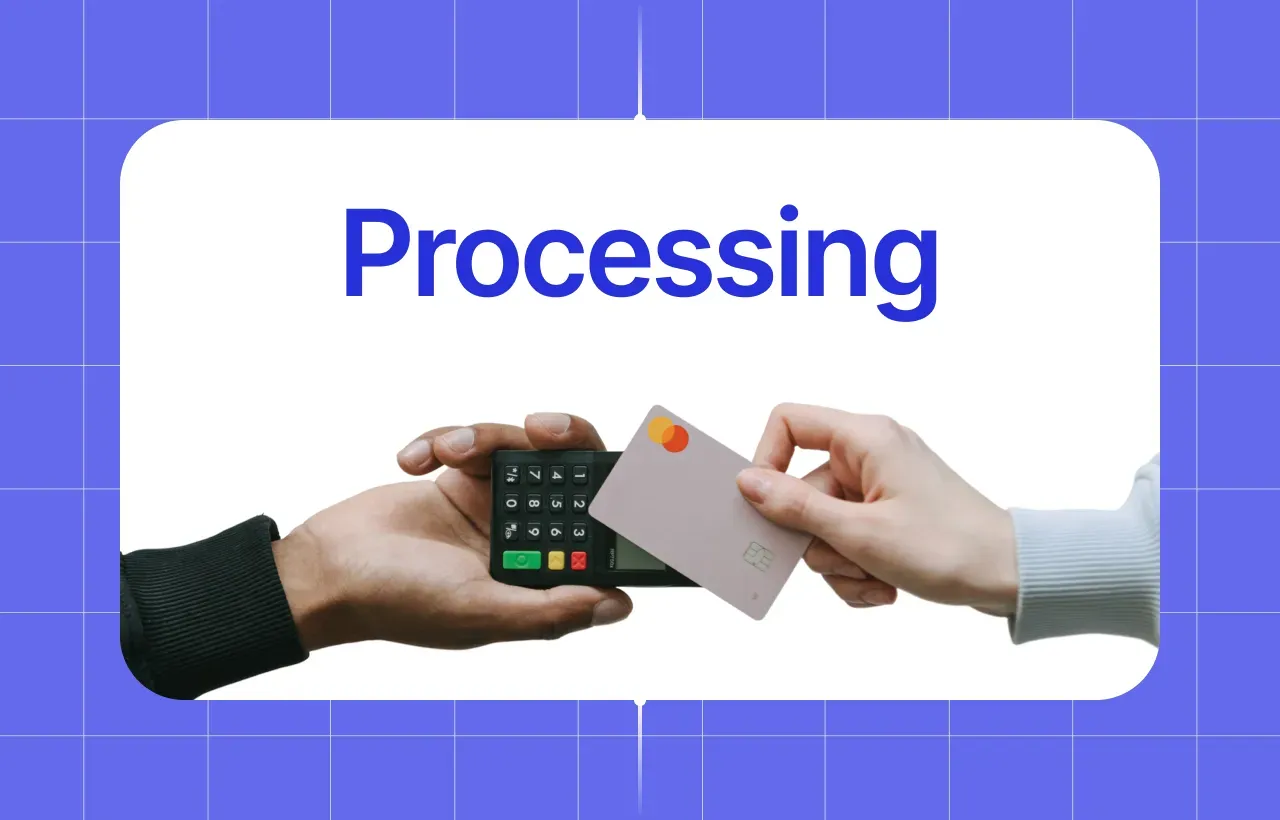
What Is Processing?
Processing is everything that happens to move money from a customer’s card to a seller’s account after a purchase. At checkout, the customer sees only a brief pause. Behind it, the payment gateway sends the request to the payment processor. From there, it moves through the acquiring bank and card network to the issuing bank, which returns a response.
One company may handle several of these roles, which makes the names confusing. A merchant services provider may supply both the gateway and the processor, while the merchant receives funds through a merchant account. For payment processing merchants, the practical questions are simple: When do deposits arrive, and what happens when a payment fails?
How Payment Processing Works
The credit card payment process begins when a customer taps, inserts, swipes, or types in card details. At this point, no money has changed hands. The first job is transaction authorization.
The gateway passes the request to the processor, which routes it through the acquiring bank and card network to the issuing bank. The issuer checks the card and account, runs its fraud process, and returns an approval or decline. An approval only reserves the amount. It does not mean the merchant has been paid.
The money moves later. The merchant captures the sale, and most providers wait until the end of the day to sweep up every approved transaction at once, a step known as batch processing. Clearing comes next. Then settlement, which is where the acquiring bank actually collects the funds. Any hold comes off, the transaction fee comes out, and the payments process wraps up with whatever remains landing in the merchant account.
There’s a practical side to knowing these stages, too. When a payment goes wrong, the records tell you where. The authorization response settles whether the purchase was approved in the first place. For a sale that got approved but never showed up, the capture or batch record will say whether it was ever submitted.
For a missing deposit, the settlement reference shows when funding was prepared. Reading these records in this order separates a checkout failure from a capture issue or a delayed deposit. They give your processor a trail when tracing refunds or answering customer questions.
Related terms
Related articles














Ready to get started? Let's get your money back!
Contact our team, and we’ll be happy to assist you!