

BIN (Bank Identification Number)
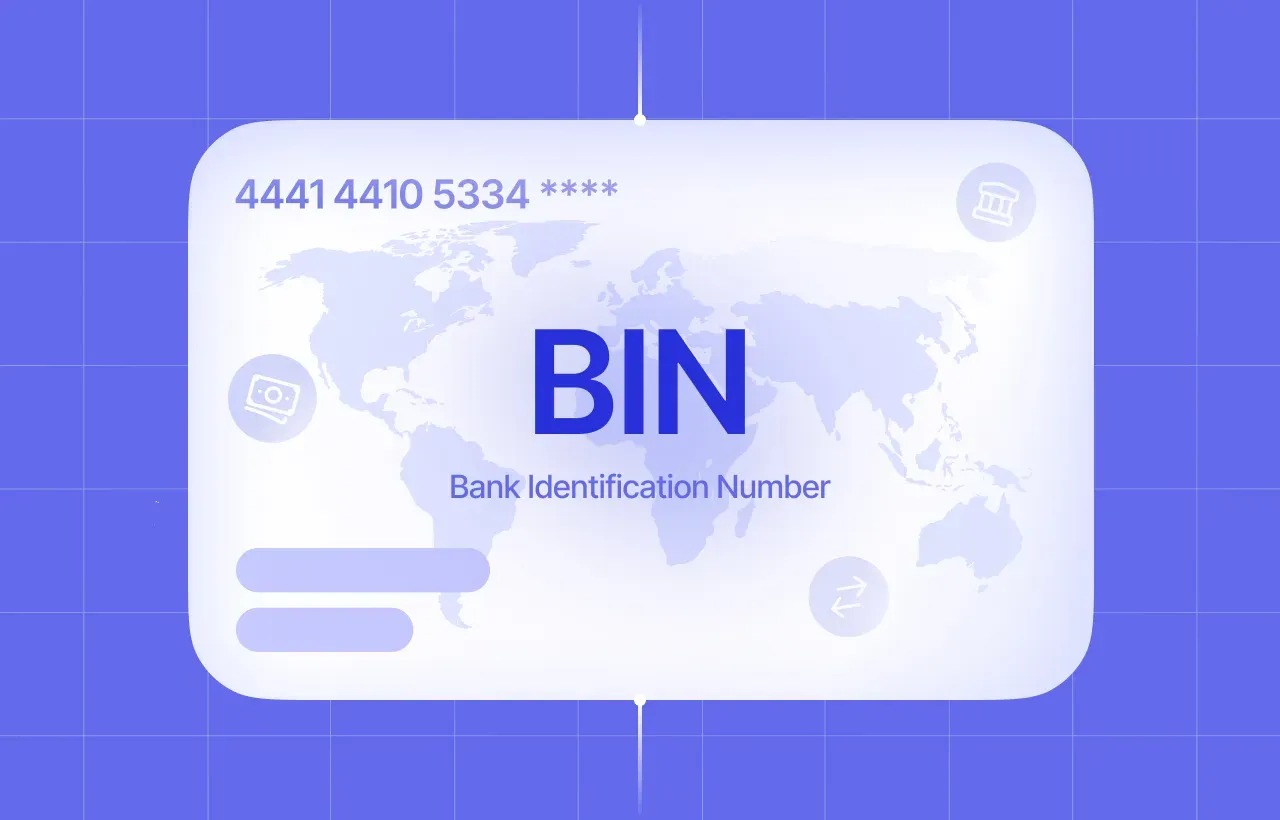
What Is a Bank Identification Number?
A bank identification number, or BIN, sits at the very start of a card’s primary account number (PAN), running either six or eight digits long. To get at the meaning of BIN, think about what happens the moment you tap or swipe: Those opening digits tell the network which bank issued the card and where to route it next.
The first digit is known as the major industry identifier (MII), which places the issuer in a broad business category. Together, the full BIN identifies the card issuer or program. The remaining PAN digits identify the account, while the final digit checks for common entry errors. A BIN alone does not reveal the cardholder’s name, balance, or full card number.
Six digits were the standard for many years. As more card programs entered the market, available ranges began to run short. Visa now assigns eight-digit BINs to new payment credentials, although older six-digit ranges are still active. Merchant systems must read both formats rather than assume every BIN ends after six digits.
Why Do Merchants Use BIN Data and How Does It Work?
Picture a customer tapping their card at checkout. The merchant’s payment processor puts together an authorization request and sends it through the card network. The BIN identifies the issuing bank, so the network knows where that request needs to land. From there, the bank weighs the account and payment details before it decides anything. BIN data gets the request to the right door; it never approves the sale.
What can a merchant learn from a BIN lookup? Depending on the database, the result may include the issuer, card network, issuing country, card type, and product category. That context can confirm whether the card is accepted, apply payment rules, estimate processing costs, or help a business select a processor.
Say a merchant accepts standard debit cards but handles prepaid or corporate cards differently. The BIN lets the checkout recognize the card type early and apply the correct payment rule. If more than one processor is available, it can also help send the transaction through the most suitable route.
Fraud detection is another common use. If a card was issued in one country but the order comes from an IP address, billing address, or delivery location somewhere else, the difference may deserve a closer look. It is still only a signal. People travel, relocate, buy gifts, and shop across borders, so a location mismatch should not trigger an automatic decline on its own.
BIN patterns may also expose card testing. In this attack, someone runs small payments to learn which stolen card details still work. Seeing a burst of declines from a single BIN range, device, or IP address can make it easier to spot a pattern. Even then, merchants should weigh the signal against transaction history, device information, and customer behavior before blocking an entire range.
The data remains useful after payment. Merchants may group fraud reports and chargebacks by issuer, country, card product, or sales channel. If one group produces unusually high disputes, the business can trace the traffic and adjust checkout controls where the problem begins. This avoids adding friction to every order.
BIN records change over time. Banks merge, and account ranges move to new owners. An outdated bank identification number list can return the wrong issuer, sometimes leading straight to a false decline. Mastercard keeps a current BIN Account Range Table, and maintained lookup services offer another option.
Eight-digit BINs can also expose weaknesses in older payment rules. A fraud filter or report that reads only six digits may group cards incorrectly and miss useful differences between programs. Merchants should review routing rules, reporting, fraud checks, and PAN truncation practices for both formats. Since the BIN forms part of the PAN, any system that stores, processes, or sends the full card number must also follow PCI DSS.
Is BIN the Same as IIN?
For everyday payment work, BIN and issuer identification number (IIN) refer to the same opening portion of a card number. IIN is the broader standards term because banks are not the only organizations allowed to issue cards. BIN is simply the name that remains more familiar to merchants and payment platforms.
A BIN cannot identify bank routing number details. An ABA routing number is a separate nine-digit code used for U.S. checks and bank transfers. The phrase international bank identification number often reflects confusion with an International Bank Account Number (IBAN), which identifies an account used in international payments. Questions about bank check number identification concern the number printed on an individual paper check. None of these refers to a payment card’s BIN.
For a merchant, keeping those identifiers separate avoids bad transaction routing decisions and misleading fraud signals. A BIN or IIN can show where a card came from and add useful context to a payment. It cannot replace authentication, current account information, or a complete review of the transaction.
Related terms
Related articles












Ready to get started? Let's get your money back!
Contact our team, and we’ll be happy to assist you!