

Chargeback Reason Code
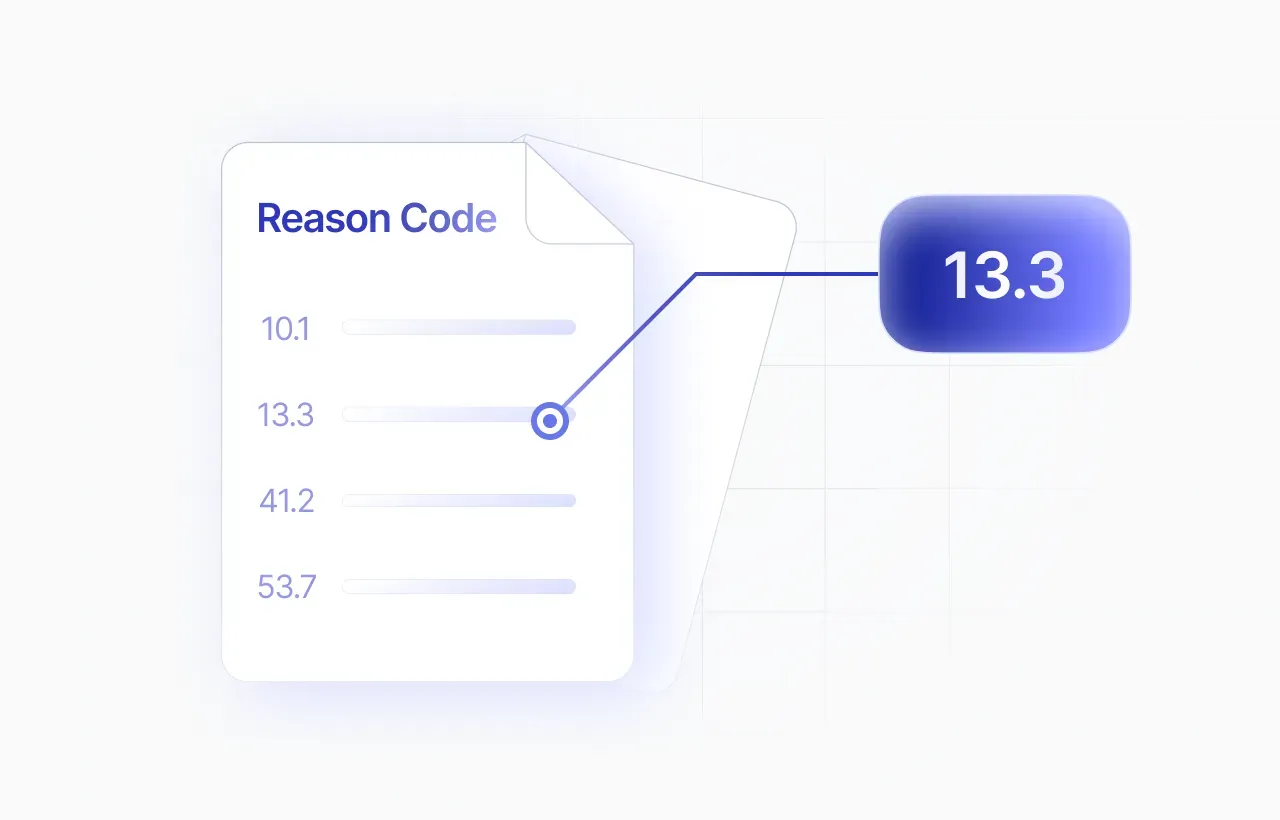
When a dispute arrives, the most useful detail is not the amount or the customer’s name. It is the chargeback code attached to the case. That short label tells you what the cardholder’s bank claims went wrong, and it shapes what you gather, what you argue, and how you frame your reply.
What Is a Chargeback Reason Code?
Every chargeback reason code records the basis the issuer gives for a dispute. It travels from the issuing bank through your acquirer to you, and it points to the rules, response options, and evidence that apply to that transaction. Think of it as the claim, not the verdict. It says what is being alleged, not who will win.
Each card network names these labels differently:
- Visa: Dispute conditions, grouped under Conditions 10 through 13
- Mastercard: Message reason codes
- American Express: Chargeback codes
Here, merchant chargeback reason codes describe the claimed cause of one disputed transaction. Decline codes, MATCH listings, and monitoring categories are separate systems.
If you contest the dispute, your response must address the reason actually given. The industry calls this representment, though the formal terms vary: Mastercard speaks of a second presentment, and Visa of a Dispute Response. Some Visa fraud disputes let you lean on compelling evidence.
In April 2026, Visa extended Compelling Evidence 3.0 through Order Insight, aimed at qualifying cases with suspicious transactions or first-party misuse. Whatever the code, Visa’s advice is to pull together receipts, shipping records, and customer messages, then send them through your acquiring bank for the issuer to review.
How Reason Codes Are Categorized
The easiest way in is Visa’s numbering. Its dispute conditions fall into four groups:
- 10, Fraud: Counterfeit fraud under the EMV liability shift (10.1), plus other fraud, split into card-present (10.3) and card-absent (10.4) transactions.
- 11, Authorization: A declined authorization (11.2), or no authorization at all, including late presentment (11.3).
- 12, Processing errors: Wrong currency, account number, or amount, duplicate processing, payment by other means, and invalid data.
- 13, Consumer disputes: Orders or services that never arrived, canceled recurring payments, defective or misdescribed items, counterfeit merchandise, misrepresentation, and credits not processed.
In practice, that means three kinds of conversation. With fraud chargeback reason codes, the question is whether the real cardholder made or approved the purchase. With an authorization/processing error, the question is whether the required authorization and transaction-processing steps were followed correctly. With a customer dispute, the question is whether you delivered what was promised.
Mastercard has its own message reason codes, including 4808 for disputes tied to authorization and 4853 for cardholder disputes.
American Express organizes its codes by prefix. A covers authorization issues, C covers Card Member disputes, F covers fraud, and P covers processing errors.
That is why any chargeback codes list needs to identify the card network. A Visa code does not translate number for number into a Mastercard or American Express equivalent.
Some merchants also search for an identity fraud code, but no single code carries that name across the industry. Each network files stolen-identity and unauthorized-use claims under its own fraud codes. Mastercard’s MATCH reason code 14 is labeled Identity Theft, yet it is a merchant-screening entry, not a transaction chargeback code.
Visa Claims Resolution (VCR) was built to streamline and automate how disputes are handled. It runs through Visa Resolve Online (VROL), the platform where disputes, supporting documentation, and pre-arbitration are managed.
Examples of Reason Codes by Card Network
Each card network runs its own reason-code system, so a code’s number only makes sense within that network. The examples below show how Visa, Mastercard, and American Express label similar problems.
Visa
- 10.4: A fraud claim on a purchase made without the card
- 11.2: A transaction processed after the issuer declined it
- 12.5: The amount charged differs from the amount agreed
- 12.6: The same sale charged twice, or already paid another way
- 13.1: The order or service never arrived
- 13.3: What arrived was defective or did not match the description
Mastercard
- 4808: A dispute over authorization
- 4837 (37): The cardholder denies authorizing the transaction
- 4853 (53): A general cardholder dispute
- 4870 (70): A fraud claim covered by chip-card liability rules
- 4871: Chip-card rules applied to lost, stolen, or never-received cards
American Express
- A02: No valid authorization for the charge
- C08: The cardholder never received the purchase
- F29: A fraud claim on a card-not-present charge
- P08: The same charge billed twice
The code should shape the response. A fraud claim may call for very different evidence than a “not received” dispute or an authorization issue. Start by identifying the network and the reason given, then build your response around that specific claim.
Related terms
Related articles









Ready to get started? Let's get your money back!
Contact our team, and we’ll be happy to assist you!